UX/UI Design
Website redesign
CMS architecture
A complete website redesign combining UX strategy, a new visual identity and a structured content management system.
The project addressed two key needs: helping visitors discover PATREC’s research and making content management easier for the internal team.
Client
PATREC
Year
2025 – 2026
Services
Information Architecture, UX/UI Design, CMS Architecture, WordPress Development
Platform
WordPress, Advanced Custom Fields, Elementor
Scope
Website redesign, content migration, dynamic CMS and templates
PATREC’s previous website relied on individually constructed pages and posts. Research, publications and institutional information were hard to navigate, and every update meant building and formatting pages by hand.
UX Strategy & Website Design
UX analysis, information architecture, visual identity and complete website design.
CMS Architecture & Content Migration
Custom WordPress content structures, ACF fields, dynamic templates, content migration and publishing workflows.
I led the project end to end, from initial UX analysis and stakeholder consultation through design, CMS architecture and implementation.
01
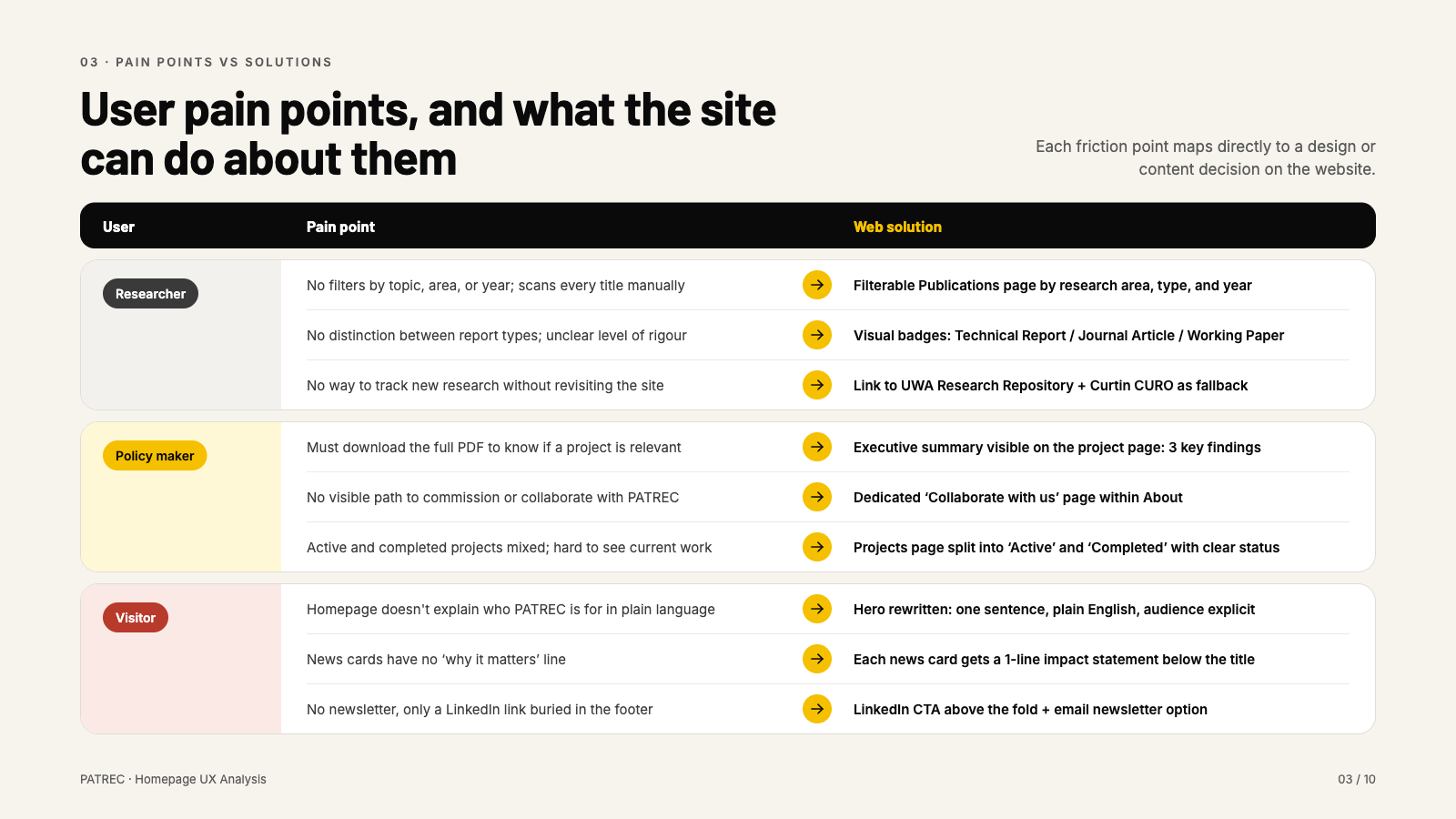
I analysed three key audience groups: researchers and academics, policy makers and government partners, and curious visitors.
Their goals, needs and pain points informed three end-to-end user flows, mapping how each audience navigates the website to find relevant information.
The website’s information architecture was rethought to better support PATREC’s audiences and publishing needs.
I defined the navigation, content hierarchy and page relationships, translating the proposed structure into wireframes. This included reorganising institutional and governance content into clearer sections. The proposal was presented to PATREC for review and validation.
Persona analysis
Three audiences with different goals, pain points and risks for PATREC.
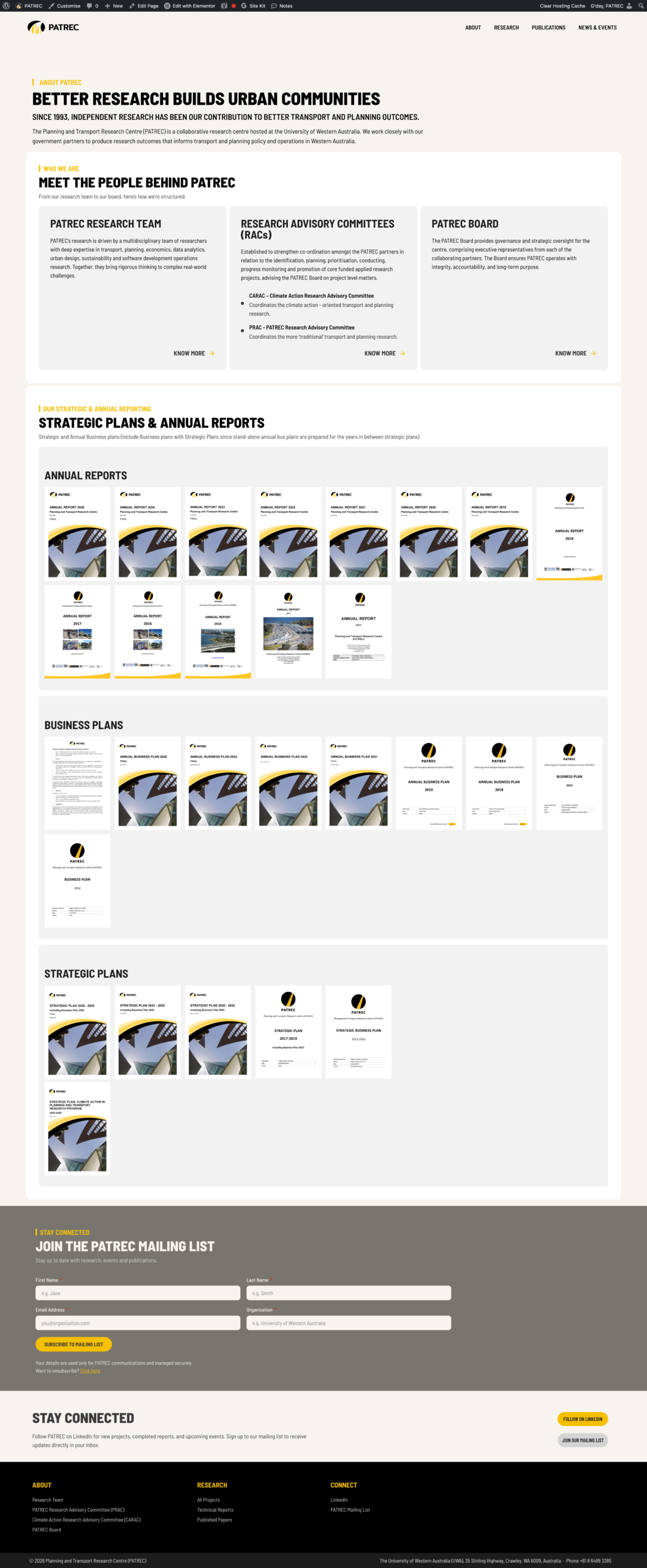
Homepage UX strategy
The current homepage next to the recommended structure, ordered by audience priority.
The homepage was structured around the priorities of the three audiences, rather than the volume of available content.
The proposed hierarchy prioritised the mission statement, partner organisations, research programmes and latest news, with clearer calls to action and more prominent access to key information.
The existing PATREC logo provided the foundation for a new visual identity. I developed the colour palette, typography and visual language, exploring three homepage concepts before combining elements from two directions into the final design following PATREC’s feedback.
The selected direction was then applied across the complete website, with layouts tailored to its different sections and content types.
Homepage concept exploration
Multiple homepage concepts were explored collaboratively, comparing different visual directions and narrowing down the options together to arrive at the final design.
02
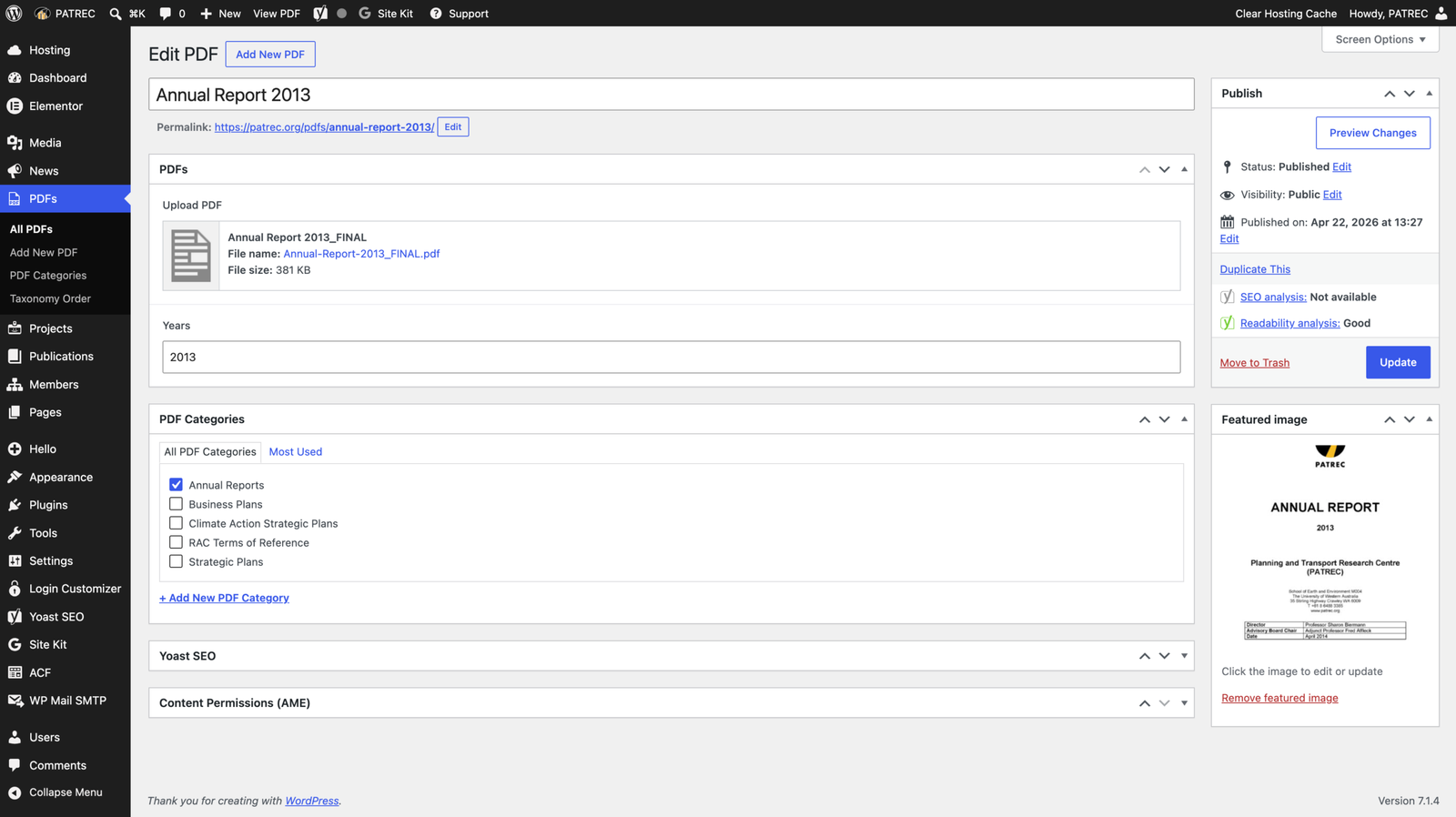
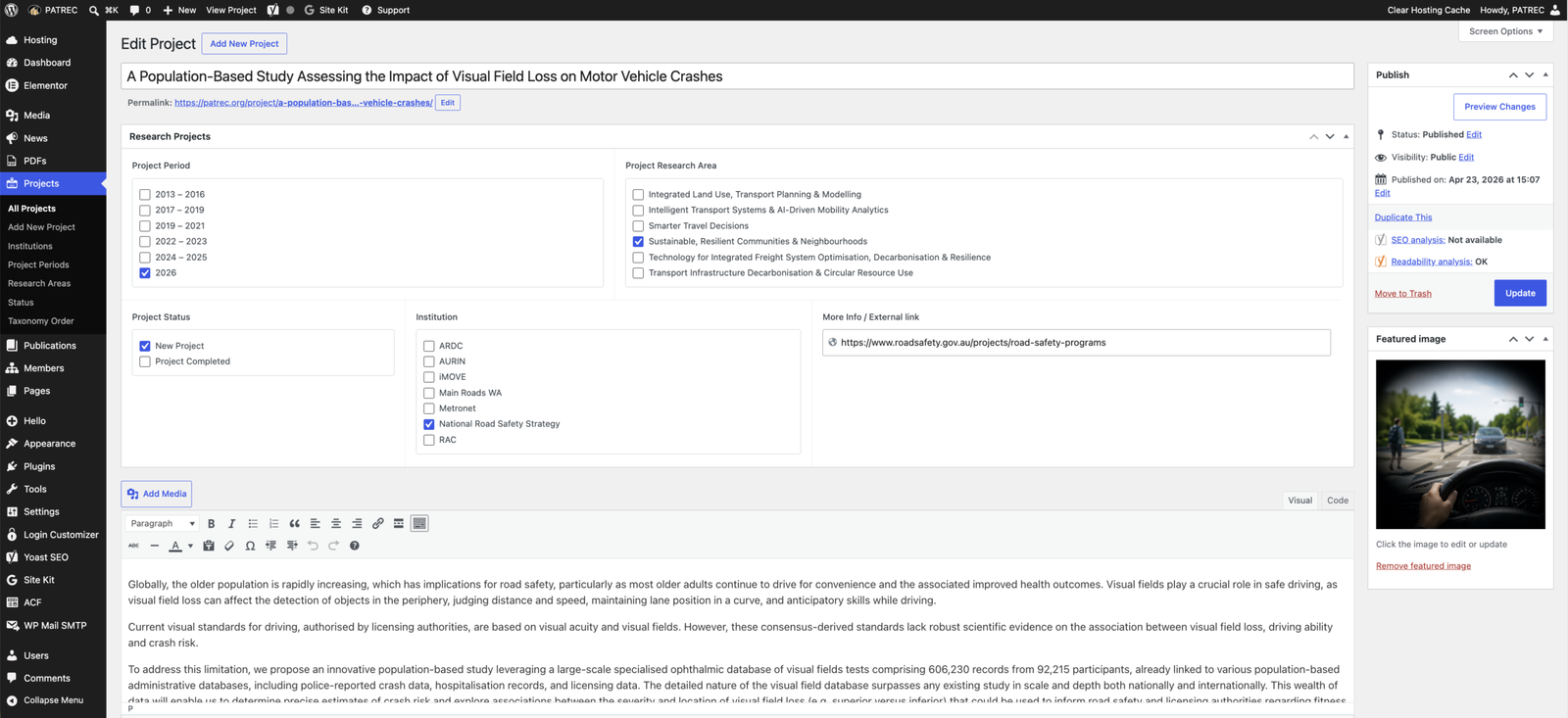
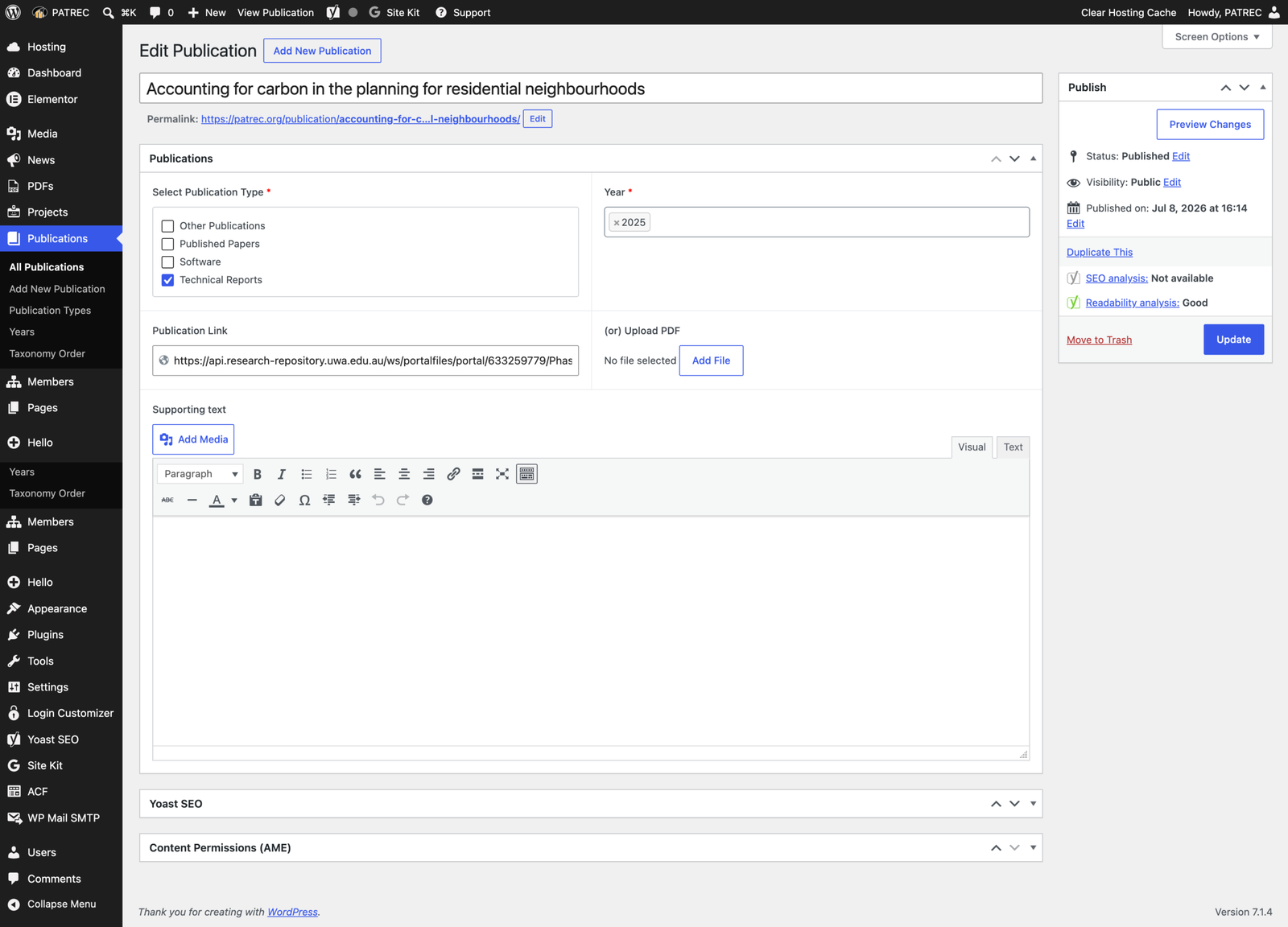
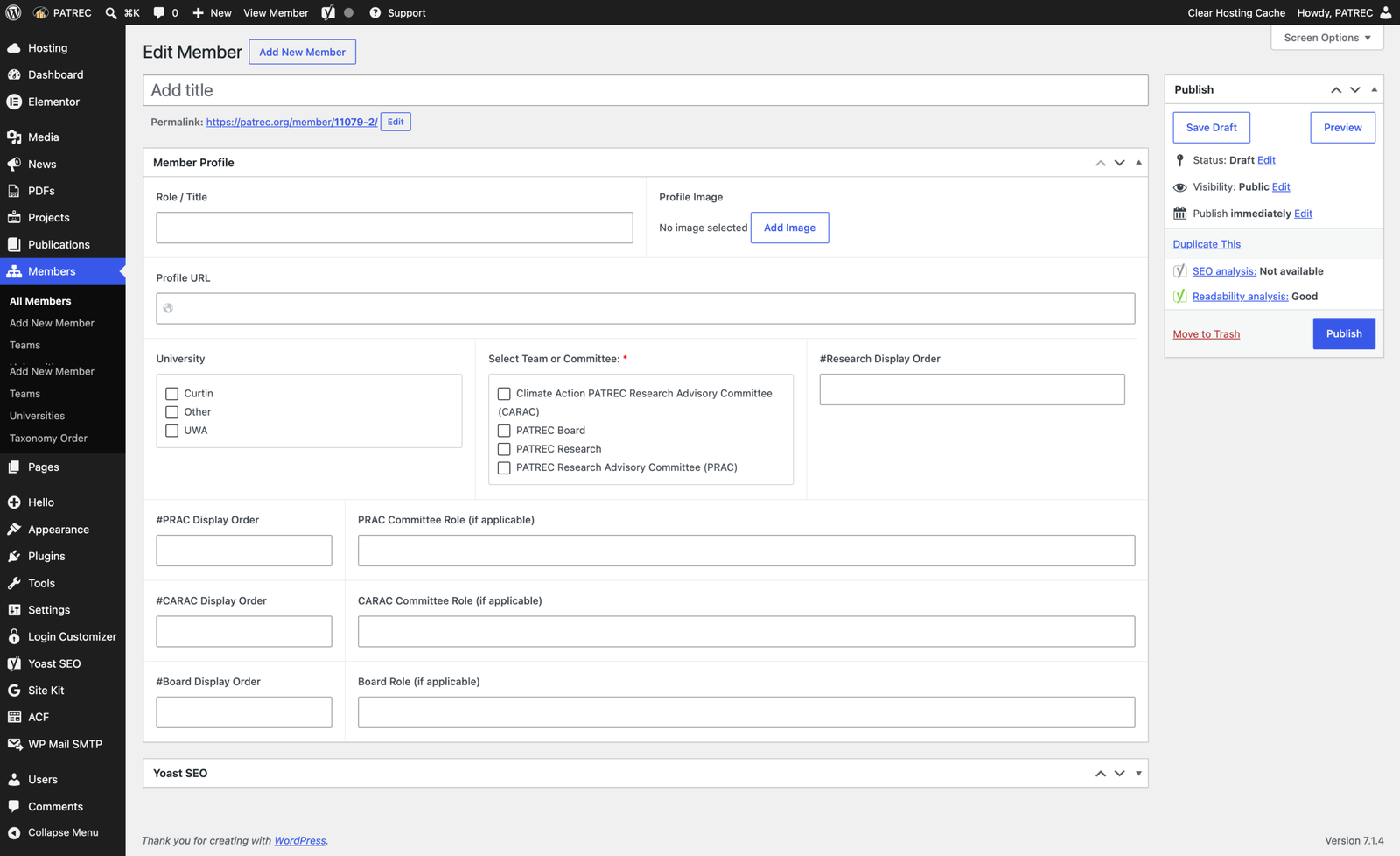
I restructured the existing website content into five dedicated WordPress Custom Post Types, each with tailored ACF field groups:
News & Events
PDFs
Projects
Publications
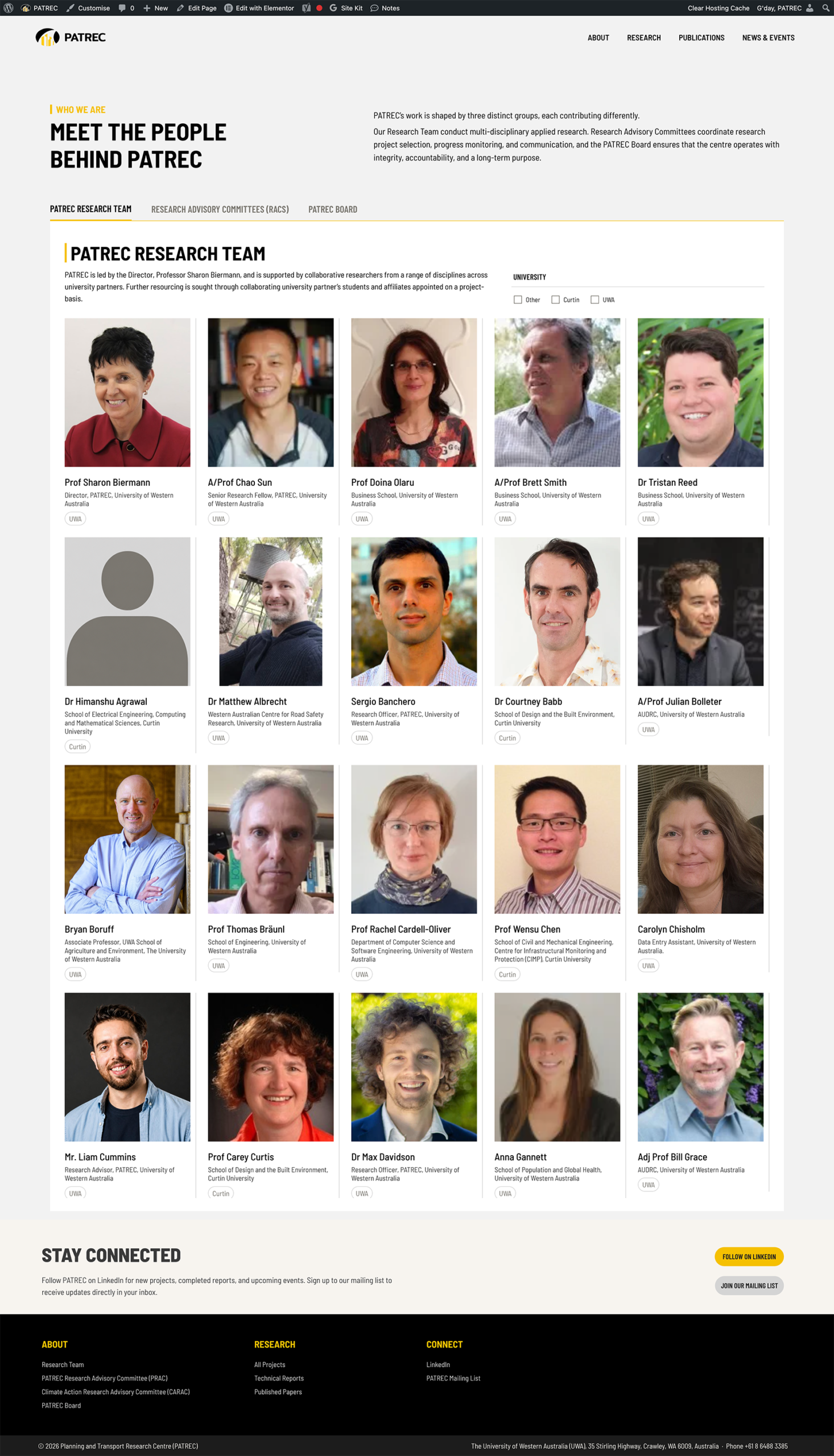
Team Members
This replaced the previous approach of building individual pages and posts manually with a structured content model tailored to PATREC’s publishing requirements.
Using Elementor Dynamic Tags, I connected ACF fields to reusable Single and Archive templates. Each content type has its own page template, while archive pages automatically organise and display published entries.
I also implemented combined archive filters for research areas, categories, publication types, years, researchers and project status, allowing visitors to refine results across the content catalogue.
I migrated 394 entries across the five Custom Post Types, along with 19 existing pages.
The new workflow allows the team to select a content type, complete its fields, upload documents and publish. The corresponding page is generated automatically using its predefined template, and archive listings update without manual formatting.
1. Select a content type
2. Complete its fields
3. Upload the relevant documents
4. Publish
The redesign addressed both sides of PATREC’s publishing experience.
For visitors: research, publications and projects can be explored through clearer navigation, structured archives and combined filters.
For the PATREC team: dedicated content types and dynamic templates make publishing and updating the website easier, without manually constructing individual pages.
Documentation and recorded video tutorials were also provided to support the handover and independent website management.